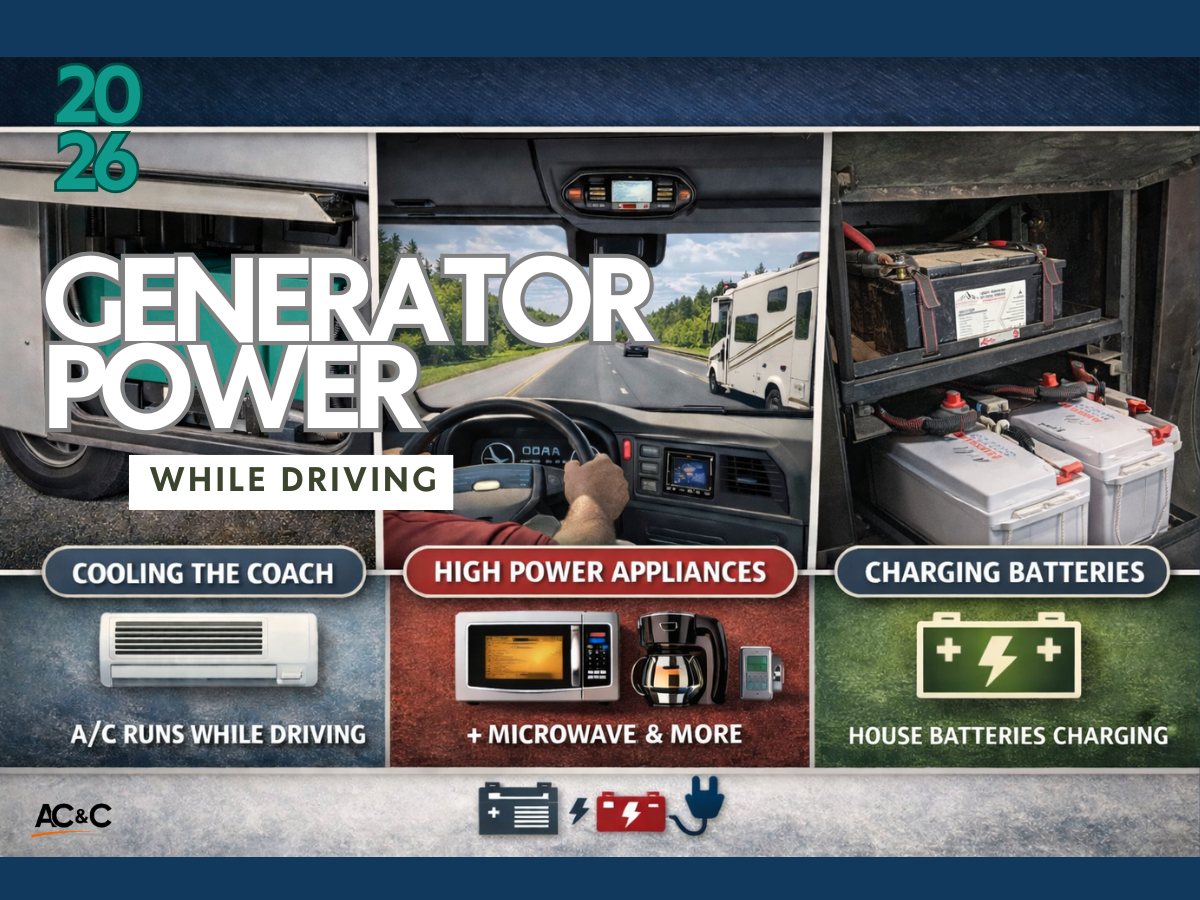
Generator Power While Driving, What It Powers and How It Affects Your Batteries
After understanding your battery system and storage setup, the next most common question we hear is:
“Do I need to run my generator while driving to have air conditioning, use the microwave, or keep my batteries charged?”
The short answer is sometimes, but not always. It depends on what you want to power and how your coach is designed.
If you have not already read our article, Understanding Your Motorhome Battery System, Storage, and Maintenance, we recommend starting there. This post builds directly on those concepts.
What Power Sources Are Available While Driving?
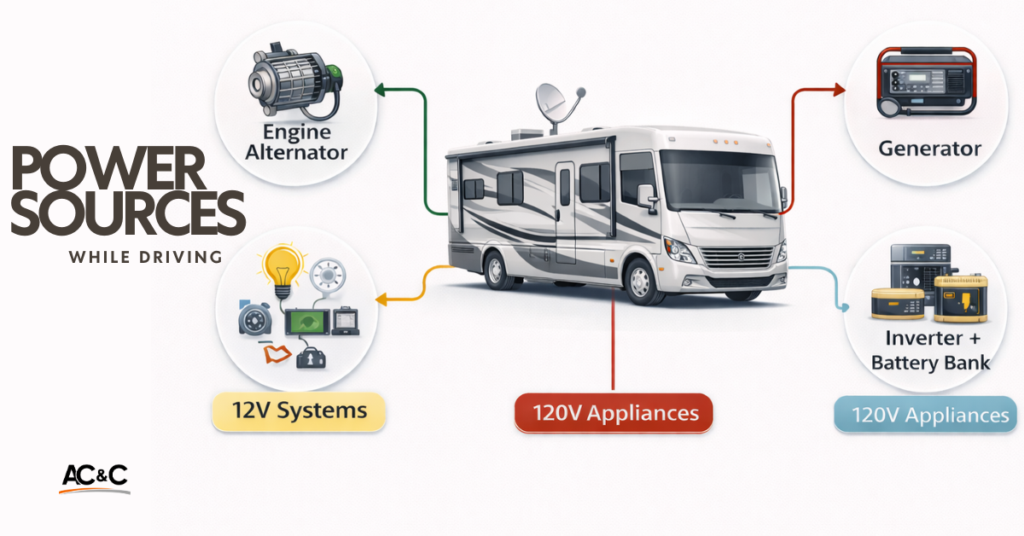
When you are driving your motorhome, you typically have access to three different power sources:
-
The engine alternator
-
The generator
-
The inverter and battery bank
Each one serves a different purpose.
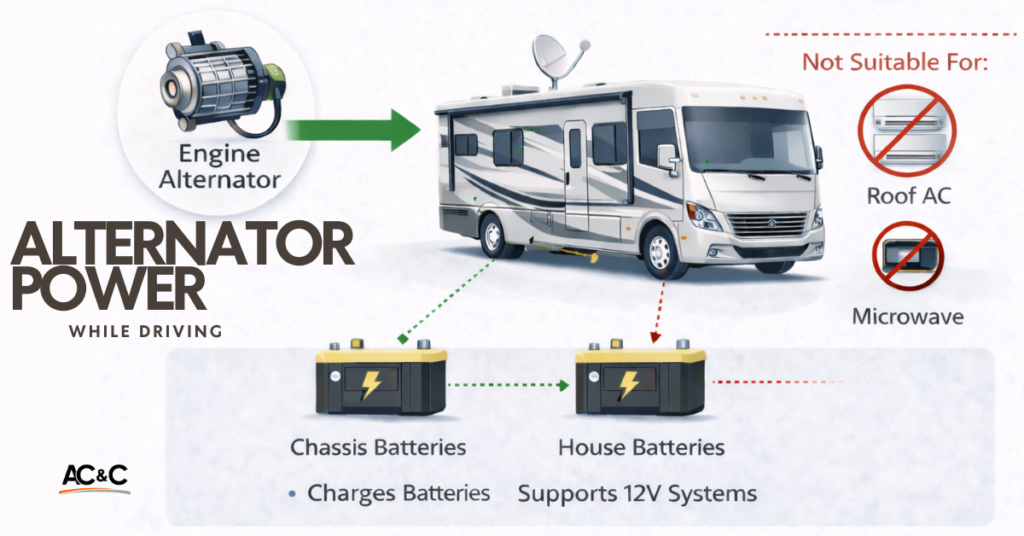
Alternator Power While Driving
The engine alternator is primarily responsible for charging the chassis batteries. On most motorhomes, it will also charge the house batteries while driving through a battery combiner, Big Boy system, or charging relay.
What alternator power does well:
-
Maintains and charges batteries while driving
-
Supports 12V systems like lights, fans, control boards, and dash electronics
What alternator power does not do:
-
It does not power 120V appliances like air conditioners or microwaves
-
It is not designed to run large electrical loads directly
Alternator charging is excellent for battery maintenance while driving, but it is not a replacement for shore power or generator power.
Inverter Power While Driving
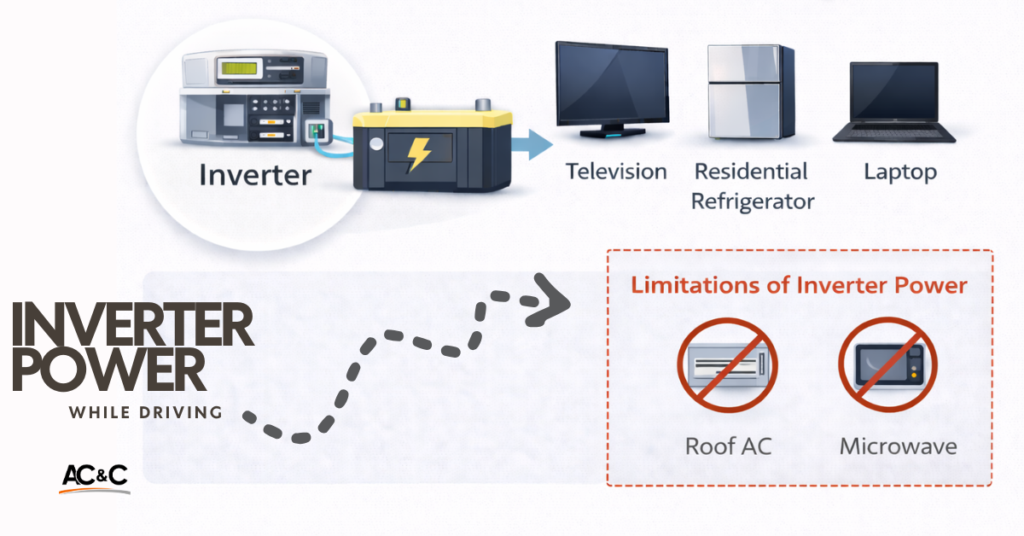
An inverter converts battery power into 120V AC power. While driving, the inverter can supply power to certain outlets and appliances depending on how the coach is wired.
Common inverter powered items:
-
Television and entertainment systems
-
Residential refrigerator
-
Selected outlets
-
Small appliances
Limitations of inverter power:
-
Air conditioners and microwaves usually exceed inverter capacity
-
Power is limited by battery size and inverter rating
-
Heavy use can drain batteries quickly
Some higher end coaches with large lithium battery banks and high capacity inverters can run more appliances, but this is not typical for most motorhomes.
Generator Power While Driving
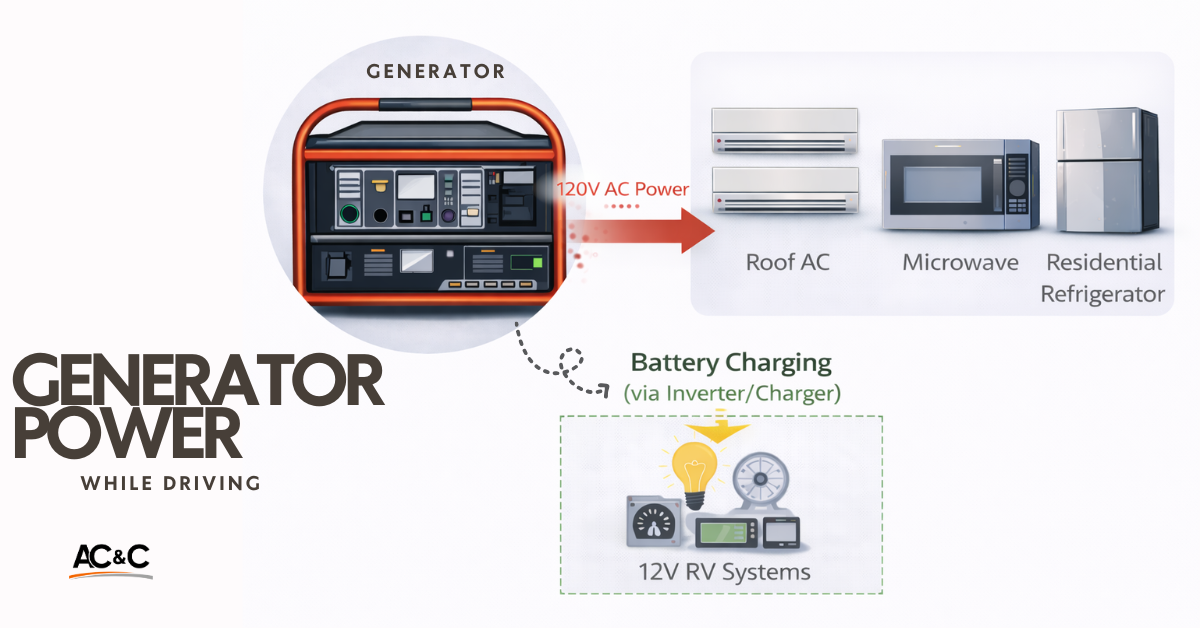
The generator provides full 120V AC power similar to shore power. When the generator is running:
-
All coach air conditioners can operate
-
Microwaves and other high draw appliances can be used
-
The inverter charger can actively charge house batteries
This is why generators are commonly used while driving, especially in hot weather.
Do I Need to Run My Generator While Driving?
For Air Conditioning
Yes. In most motorhomes, running the generator is the only way to power roof air conditioners while driving.
Dash air conditioning is designed to cool the cockpit area, not the entire coach.
For the Microwave
Usually yes. Microwaves draw a large amount of power and are almost always generator or shore power dependent.
For Battery Charging
Not necessarily.
While driving, the alternator typically maintains and charges the batteries. However, running the generator provides a stronger, more consistent charge through the inverter charger, especially for large house battery banks.
Generator Use and Battery Maintenance
Running the generator while driving can actually be beneficial for battery maintenance:
-
The inverter charger operates in full charge mode
-
Batteries reach proper absorption and float stages
-
Electrical loads are supported without draining batteries
This is especially helpful on coaches with larger electrical demands or when traveling for long periods.
Common Myths We Hear
“Running the generator while driving is bad for it”
Modern RV generators are designed to run under load and at highway speeds.
“The alternator can run everything”
Alternators are battery chargers, not power plants.
“If the inverter is on, I do not need the generator”
Inverters are limited by battery capacity and appliance load.
How This Connects Back to Battery Storage and Maintenance
Understanding when to use your generator helps protect your batteries.
-
Heavy electrical loads should be supported by generator or shore power
-
Batteries should not be repeatedly deep discharged
-
Proper charging during travel extends battery life
These principles directly support the storage and maintenance practices outlined in our first article.
Final Thoughts
Running your generator while driving is not about convenience alone. It is about managing electrical loads correctly and protecting your battery system.
If you are unsure what your inverter can power, how your batteries are charged while driving, or when generator use makes sense for your coach, we can help you understand your specific setup.
A few minutes of explanation can prevent years of battery issues and unnecessary wear on your system.