Many motorhome owners assume that when the engine is running, all batteries in the coach are automatically being charged. While this is sometimes true, it is not always the case.
Understanding how alternators charge chassis and house batteries is important for preventing dead batteries, improving battery life, and avoiding confusion while traveling.
In many motorhomes, alternator charging works differently depending on the year of the coach, the charging equipment installed, and whether upgrades such as lithium batteries have been added.
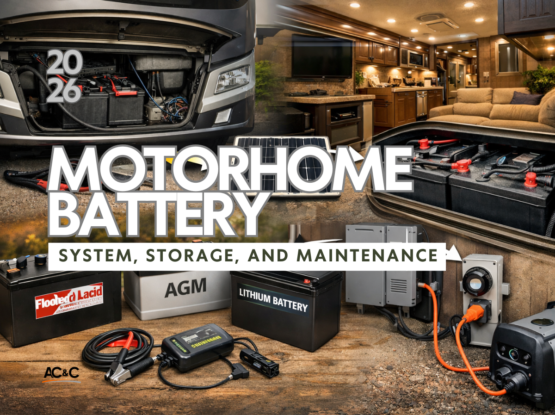
If you are not familiar with the difference between chassis and house batteries, start with our guide, Understanding Your Motorhome Battery System, Storage, and Maintenance.
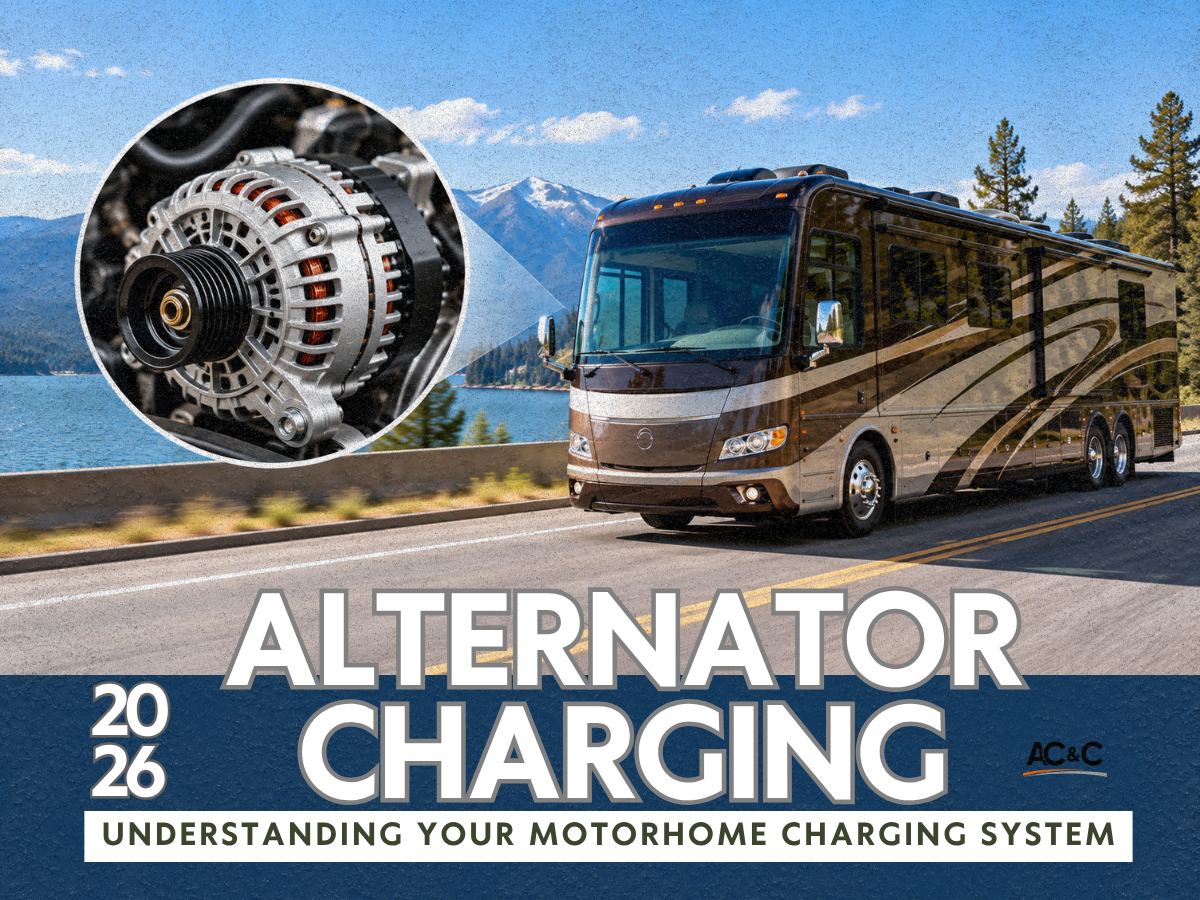
What the Alternator Actually Does
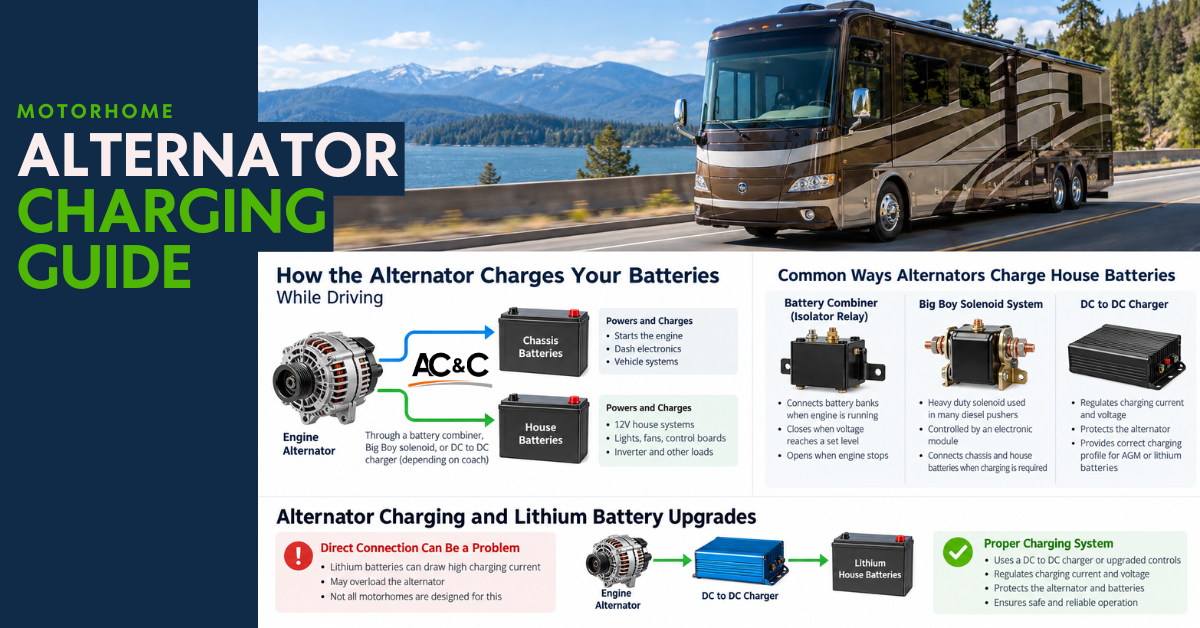
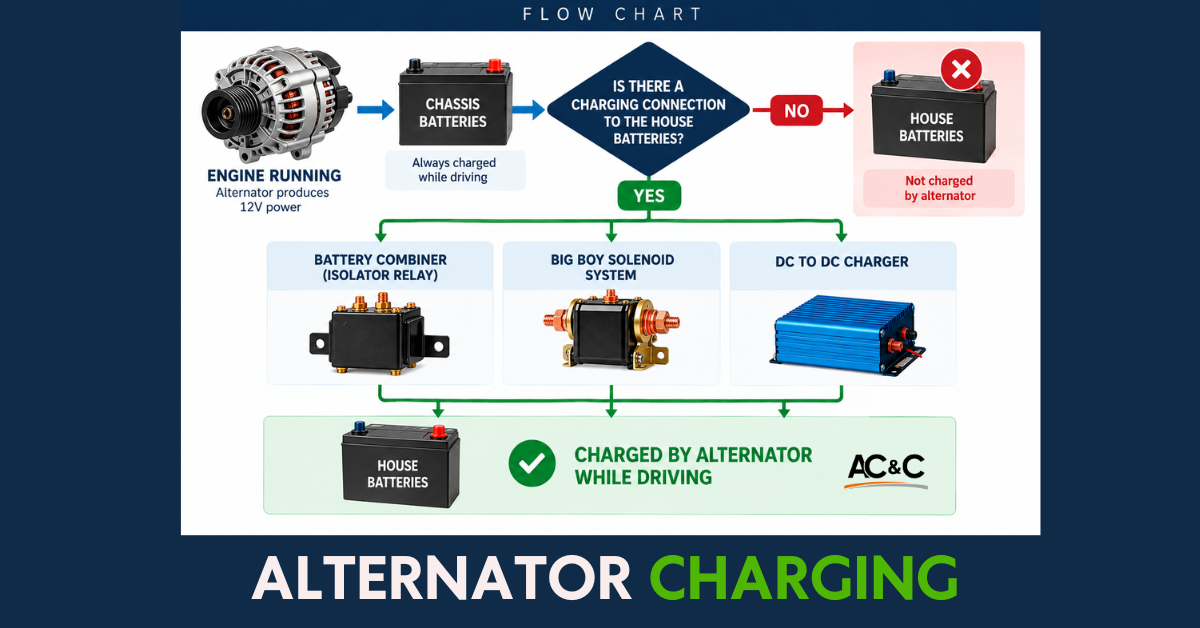
The engine alternator is designed primarily to charge the chassis batteries. These batteries start the engine and power the vehicle systems such as headlights, dash electronics, and engine controls.
Once the chassis batteries reach a stable voltage, many motorhomes allow the alternator to also charge the house battery bank.
This is where the system design becomes important.
Some coaches allow automatic charging between battery banks, while others keep the two systems separate unless certain conditions are met.
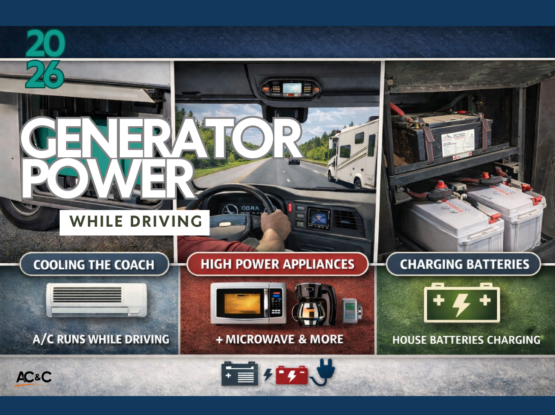
For a broader explanation of how the alternator, generator, inverter, and battery bank work together while travelling, see Generator Power While Driving.
How House Batteries Are Charged While Driving
Motorhomes use several different methods to allow alternator charging of house batteries.
Battery Combiner Systems
Many motorhomes use a battery combiner or isolator relay that connects the chassis and house batteries together when the engine is running.
When the alternator raises the chassis battery voltage above a certain level, the combiner closes and allows charging current to flow to the house batteries.
When the engine shuts off, the relay opens again to prevent the house loads from draining the chassis batteries.
Big Boy Solenoid Systems
Some diesel pushers use a heavy duty solenoid commonly called a Big Boy. This device connects the chassis and house batteries when charging is required.
These systems are often controlled by an electronic module that monitors voltage levels and decides when to connect the battery banks.
If the solenoid fails or the control module stops functioning, the alternator may no longer charge the house batteries while driving.
DC to DC Chargers
Modern motorhomes and lithium battery upgrades often use DC to DC chargers.
Instead of directly connecting the battery banks together, these chargers regulate the charging current and voltage between the alternator and the house batteries.
This approach protects the alternator and ensures the house batteries receive the correct charging profile.
Why Some Motorhomes Do Not Charge House Batteries While Driving
It is common for motorhome owners to assume their batteries are charging while travelling, only to discover that the house batteries are slowly draining instead.
Several things can cause this.
Battery combiner failure
Blown charging fuse
Faulty solenoid
Incorrect wiring after battery replacement
Lithium battery upgrades without proper charging equipment
A simple voltage check while the engine is running can quickly reveal whether the alternator is charging both battery banks.
If the batteries are charging correctly but you are trying to determine whether the alternator, inverter, or generator should be supplying power while travelling, our article Generator Power While Driving explains what each power source is designed to do.
Alternator Charging and Lithium Battery Upgrades
Lithium battery upgrades are becoming increasingly common in motorhomes.
However, lithium batteries can draw significantly more charging current than traditional batteries. If connected directly to the alternator, they may overload the charging system.
This is why many lithium installations require DC to DC chargers or upgraded charging controls.
Proper system design ensures that both the alternator and the batteries operate safely.
Battery type also affects how batteries should be charged and maintained. Our Motorhome Battery System, Storage, and Maintenance guide explains the differences between flooded lead acid, AGM, and lithium batteries, along with the different ways motorhome batteries are charged.
Understanding Your Motorhome Charging System
Every motorhome electrical system is slightly different.
Understanding how your alternator interacts with the house batteries helps prevent unexpected power loss and ensures your batteries stay healthy during travel.
If you are unsure whether your house batteries are being charged while driving, a quick inspection can confirm how your system is operating and whether upgrades or repairs may be needed.