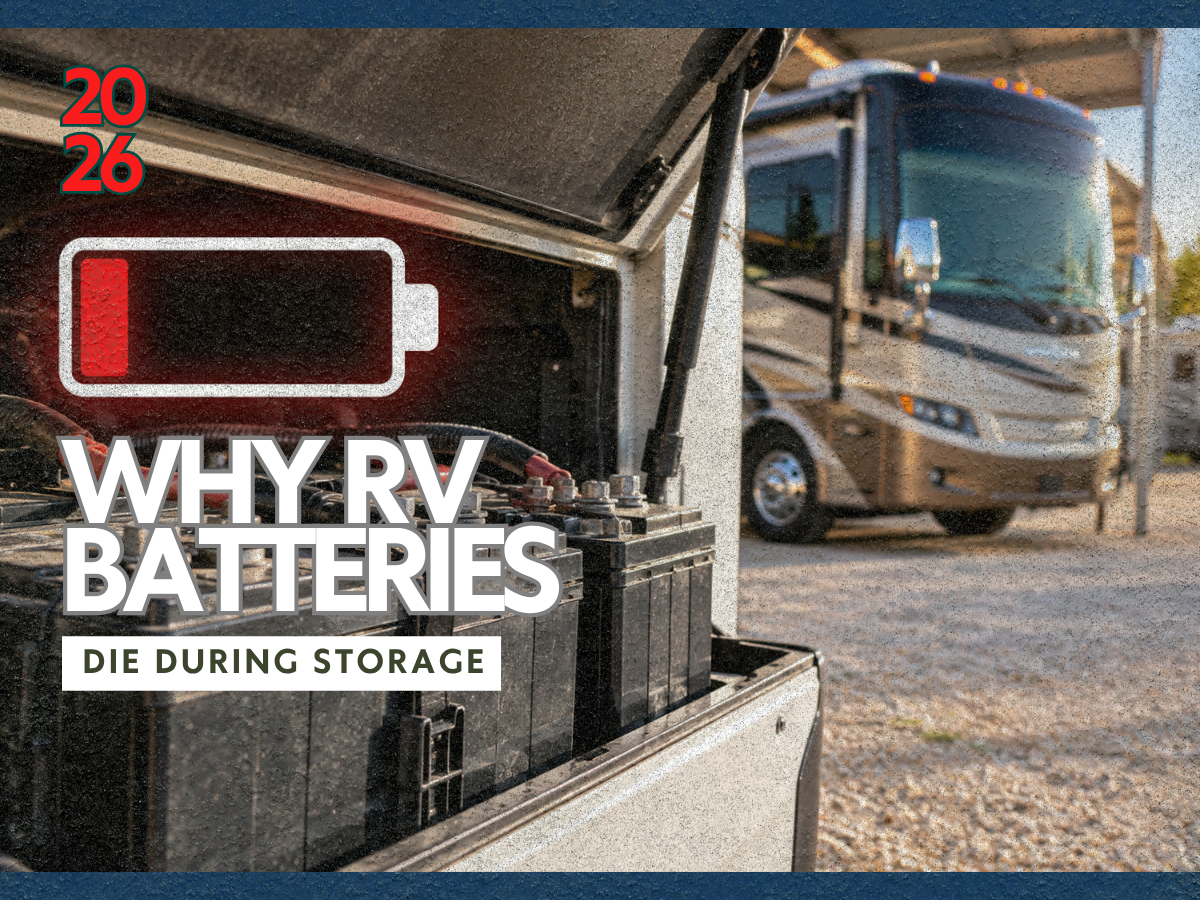
Dead batteries are one of the most common problems motorhome owners encounter after storage. Many coaches are parked with fully charged batteries, only to be discovered months later with batteries that will not hold a charge.
Understanding why this happens can help prevent costly battery replacements and unexpected starting problems.
Parasitic Electrical Loads in Motorhomes
Even when a motorhome appears to be turned off, small electrical devices continue to draw power from the batteries.
These are known as parasitic loads.
Common parasitic loads include:
Propane detectors
Step controllers
Control boards for appliances
Alarm systems
Inverter standby circuits
Over time these small electrical loads slowly drain the batteries.
Why Battery Disconnects Cause Confusion
Many motorhomes include battery disconnect switches. These switches isolate the batteries from most electrical loads in the coach.
However, disconnect switches do not always isolate every circuit.
Some components may remain connected directly to the batteries, allowing slow power draw even when disconnects are turned off.
Disconnect switches also stop charging if the coach is plugged into shore power.
This is why some owners discover dead batteries even though the motorhome was connected to power during storage.
Why Shore Power Does Not Always Charge Chassis Batteries
A common misconception is that plugging a motorhome into shore power automatically maintains all batteries.
In many coaches, shore power only charges the house battery bank through the converter or inverter charger.
The chassis batteries may remain isolated unless a maintainer, combiner system, or charging bridge is installed.
Without one of these systems, chassis batteries can slowly discharge during storage.
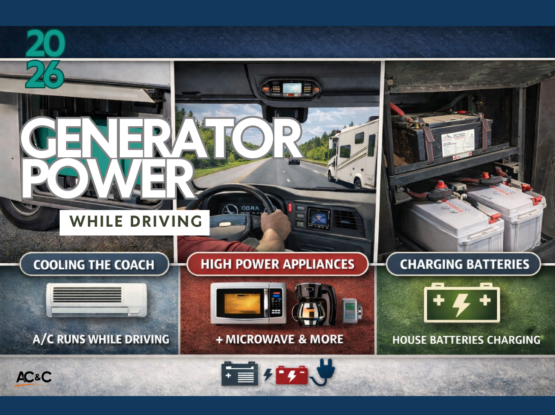
Motorhome charging systems operate differently depending on whether the coach is connected to shore power, running the generator, or travelling down the road. Learn more about these differences in our article Generator Power While Driving.
Best Practices for Motorhome Battery Storage
If the coach will remain plugged into shore power:
Leave battery disconnects on
Ensure the charger is functioning properly
Confirm the charger settings match the battery type
If the coach will not be plugged in:
Fully charge the batteries first
Turn battery disconnects off
Recharge batteries periodically during storage
Keeping batteries charged is the most important factor in extending their lifespan.
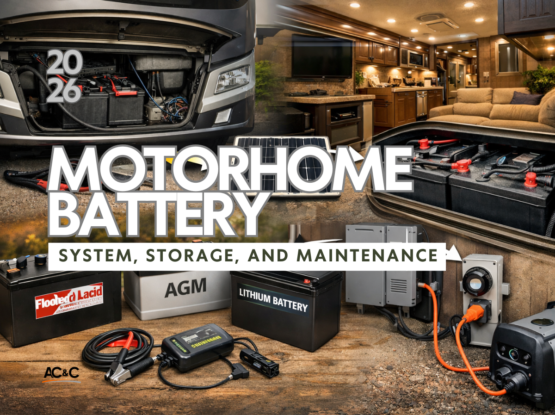
Understanding the difference between house and chassis batteries is an important part of proper storage preparation. For more information about battery types, charging, and maintenance, read our guide to Understanding Your Motorhome Battery System, Storage and Maintenance.
Preventing Battery Problems Before They Start
Motorhome batteries last longest when they remain fully charged and properly maintained.
Simple checks during storage can prevent dead batteries and unexpected failures when it is time to travel again.
Understanding how your charging system works and whether all batteries are maintained during storage can save significant time and expense.
Related Motorhome Battery & Electrical Articles
Want to better understand your motorhome’s electrical system? Explore our other helpful guides:
- Understanding Your Motorhome Battery System, Storage and Maintenance: Learn about house batteries, chassis batteries, and proper battery care.
-
Generator Power While Driving: Understand how your motorhome’s generator, alternator, and charging systems work together.