Understanding Your Motorhome Battery System, Storage, and Maintenance
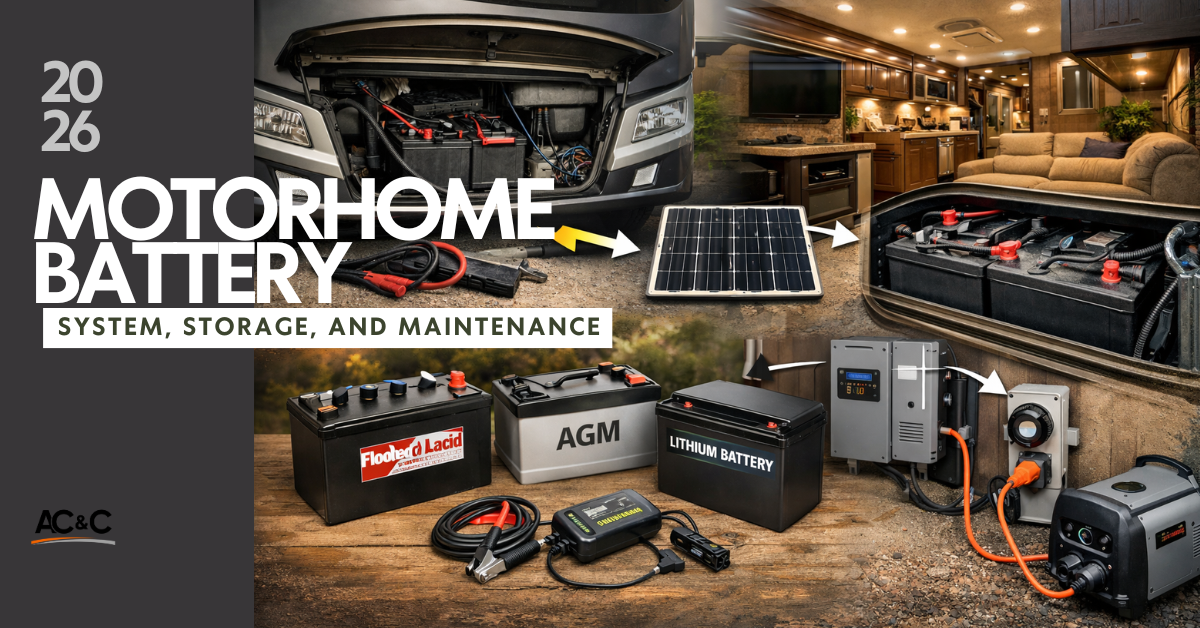
Batteries are one of the most misunderstood systems on a motorhome, yet they are critical to everything from starting your engine to running lights, appliances, and electronics. Proper motorhome battery storage and RV battery maintenance are key to avoiding dead batteries, no start situations, and costly replacements. Whether you are storing your coach for a season or using it regularly, understanding how your battery system works will help you avoid dead batteries, unexpected failures, and expensive replacements.
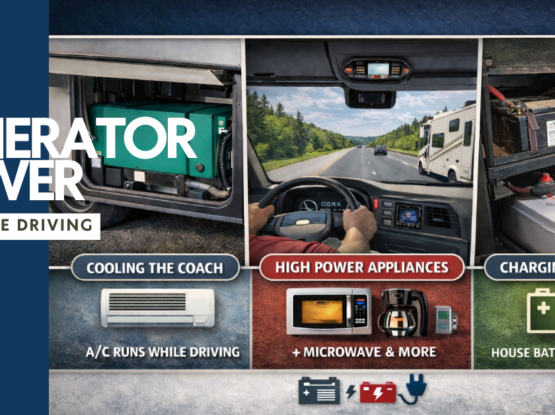
Understanding how generator power interacts with your inverter, alternator, and battery bank is an important part of managing your motorhome electrical system.
This guide breaks down battery types, charging systems, storage scenarios, and best maintenance practices in plain language.
The Two Battery Systems in Your Coach
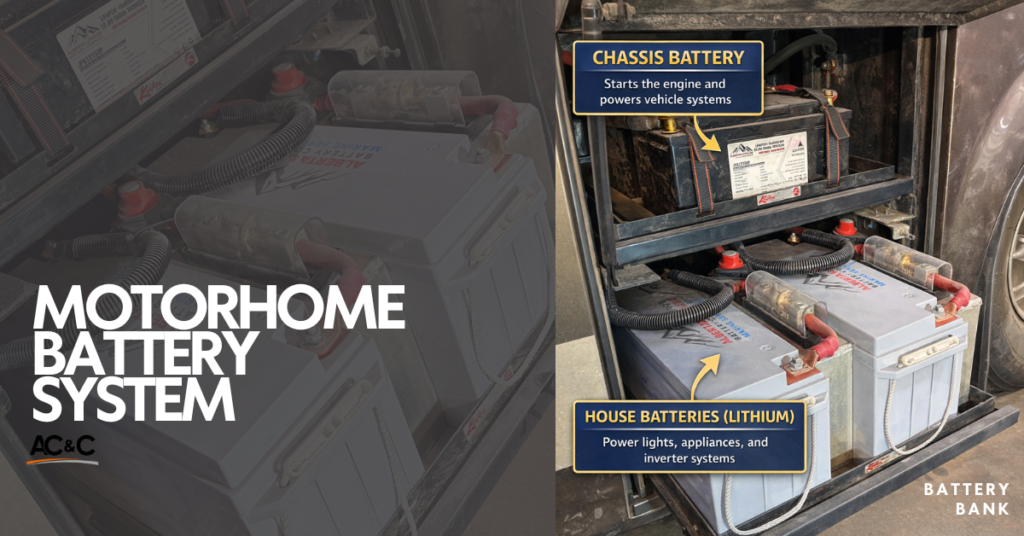
Most motorhomes have two separate battery systems:
Chassis Batteries
These batteries start the engine and power the dash systems, headlights, and chassis electronics. If these batteries are dead, the coach will not start.
House Batteries
House batteries power the living area of the coach, including lights, water pumps, furnace fans, control boards, inverters, and outlets.
These systems are charged in different ways, and they are not always connected when the coach is parked.
RV Battery Types Explained
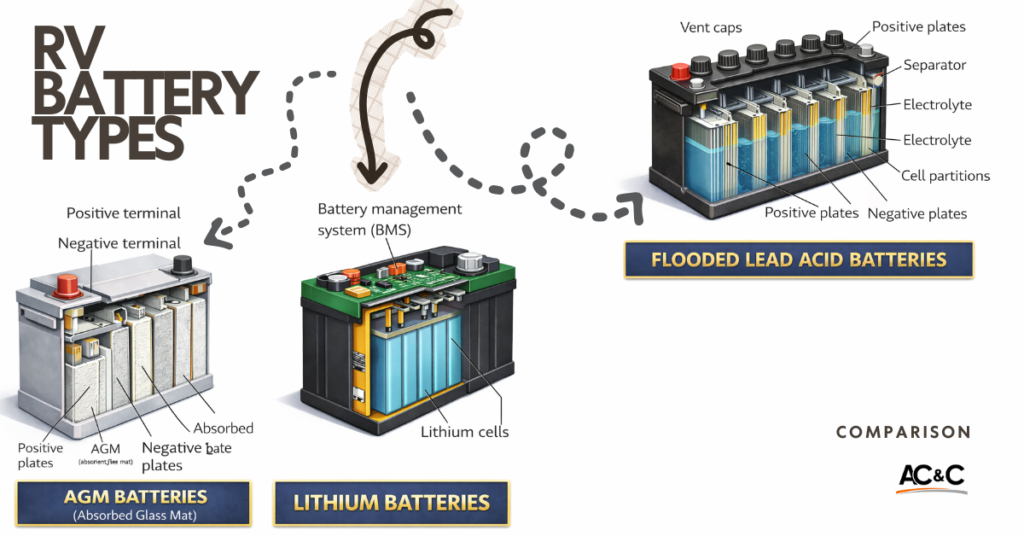
Flooded Lead Acid Batteries
-
Traditional battery with removable caps
-
Require regular water level checks
-
Least expensive upfront
-
More sensitive to deep discharging
AGM Batteries (Absorbed Glass Mat)
-
Sealed and maintenance free
-
Handle vibration better than flooded batteries
-
Can discharge deeper than lead acid
-
Still sensitive to incorrect charging voltages
Lithium Batteries
-
Lightweight with high usable capacity
-
Maintain consistent voltage
-
Charge faster
-
Require lithium compatible chargers and proper system setup
-
Higher upfront cost but long service life
Knowing your battery type is critical, because chargers must be set correctly to avoid damage.
Inverter, Charger, and Converter Explained
Converter
A converter takes 120V shore power and converts it to 12V DC to run house systems and charge house batteries. Older converters may not be smart chargers.
Inverter
An inverter converts 12V battery power into 120V AC power so you can run household outlets when not plugged in.
Inverter Charger Explained
Many modern coaches use a combined inverter charger. When plugged into shore power, it charges the house batteries. When unplugged, it inverts battery power to supply AC outlets.
Big Boy or Battery Combiner Systems
Some coaches use a Big Boy or similar solenoid system to connect and disconnect chassis and house batteries automatically. These systems may or may not charge chassis batteries when on shore power, depending on design and condition.
How RV and Motorhome Batteries Get Charged
-
Shore Power: Charges house batteries through the converter or inverter charger
-
Engine Running: Alternator charges chassis batteries and often house batteries
-
Solar: Helps maintain or charge batteries when properly sized and installed
-
Battery Maintainers: Small chargers designed to keep batteries topped up during storage
A common misconception is that being plugged in automatically maintains all batteries. In many coaches, the chassis batteries are not maintained unless a dedicated charger or maintainer is installed.
Motorhome Battery Storage Scenarios and Best Practices
Stored Inside and Plugged Into Shore Power
This is the best case scenario.
-
House batteries are maintained by the inverter charger or converter
-
Charger settings must match battery type
-
Chassis batteries may still need a maintainer
-
Flooded batteries should be checked monthly for water level
Stored Inside Without Shore Power
-
Fully charge all batteries before storage
-
Turn battery disconnects off
-
Use battery maintainers if possible
-
Check voltage monthly
Stored Outside With Shore Power
-
Same charging rules as indoor storage
-
Inspect batteries and connections more frequently
-
Ensure chargers are functioning properly
Stored Outside Without Shore Power
-
Fully charge batteries before storage
-
Disconnect batteries or use solar or maintainers
-
Check voltage regularly and recharge as needed
RV Battery Maintenance Tips
-
Never store batteries in a discharged state
-
Check battery voltage periodically, even when plugged in
-
Keep terminals clean and tight
-
Check water levels in flooded batteries regularly
-
Confirm charger settings after battery replacement
Batteries that sit discharged lose capacity quickly and may fail permanently.
Why Understanding Your Motorhome Battery System Matters
Every coach is a little different. The year, make, model, battery type, and charging equipment all affect how your batteries behave during use and storage. Knowing what charges what, and when, prevents frustration and extends battery life.
If you are unsure whether your coach charges the chassis batteries on shore power, or if your charger is set correctly, it is worth having the system checked. A simple maintainer or adjustment can save hundreds of dollars in battery replacements.
The Question We Get Asked the Most
“I don’t understand the best way to store my coach. Should the disconnects be on or off? Should I leave it plugged in or not?”
If you remember nothing else from this article, remember this:
Batteries want to stay charged. They do not want to sit dead.
Here is the simple breakdown.
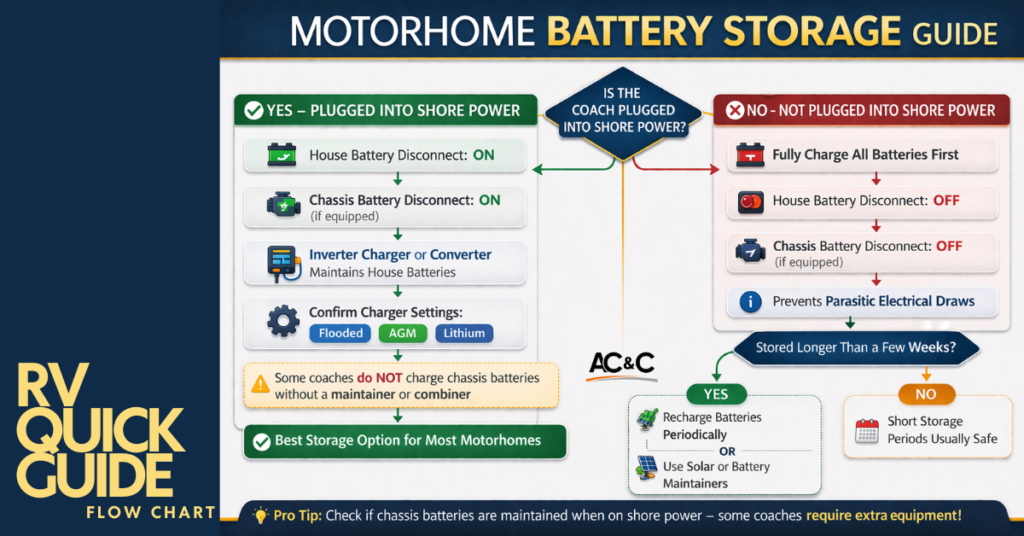
Storage Quick Guide, Plain and Simple
Plugged Into Shore Power
-
House battery disconnect: ON
-
Chassis battery disconnect: ON (if equipped)
-
Let the inverter charger or converter maintain the batteries
-
Confirm the charger is set for the correct battery type
This is the best option for most coaches, especially when stored indoors or at home with reliable power.
Important note: On many coaches, the chassis batteries are not maintained by shore power unless a maintainer or combiner system is installed. If you are unsure, this is worth checking.
Not Plugged Into Shore Power
-
Fully charge all batteries first
-
House battery disconnect: OFF
-
Chassis battery disconnect: OFF
-
This prevents parasitic draws from slowly draining the batteries
If the coach will sit for more than a few weeks, plan to either:
-
Periodically recharge the batteries, or
-
Use battery maintainers or solar
When Do Disconnects Cause Confusion?
Battery disconnects do not charge batteries. They only isolate them from loads.
-
Disconnects ON allow chargers to see and maintain the batteries
-
Disconnects OFF stop small draws but also stop charging
This is why leaving a coach plugged in with the disconnects off can still result in dead batteries.
Generator Power While Driving and Battery Charging
While battery storage and maintenance are important when your motorhome is parked, understanding how your batteries are charged while driving is just as critical. Many motorhomes rely on a combination of alternator charging, inverter systems, and generator power while travelling.
If you want to understand when it makes sense to run your generator while driving and how it affects battery charging, read our article on Generator Power While Driving, What It Powers and How It Affects Your Batteries.
Final Thoughts on Motorhome Battery Storage and Maintenance
There is no one size fits all answer, but most problems come from batteries being left discharged or isolated from a charger for long periods of time.
If your coach is plugged in, leave the disconnects on and let the charger do its job.
If it is not plugged in, disconnect the batteries and plan for periodic charging.
If you are ever unsure whether your coach maintains the chassis batteries on shore power, or whether your charger is set correctly, we can help you verify your setup and recommend the right solution.
Understanding your system upfront prevents dead batteries, no start situations, and unnecessary replacements.